















Profile view of a bearded man wearing a dark green baseball cap and a dark gray T-shirt against a plain light background.

Why your heat pump won't turn on in Massachusetts

Step 1 of 3: Equipment

Why won't my heat pump turn on?

Cold mornings here are when a heat pump not turning on really shows itself. Massachusetts winters push the system hard, and if it won't start at all, you're left wondering whether it's something simple like a tripped breaker or a thermostat setting, or something inside the unit that needs a contractor's eye.

Usually a power or control problem, not the compressor itself

Most of the time a heat pump that won't turn on at all has lost power to the outdoor unit, the indoor air handler, or both. A tripped breaker, a blown fuse at the disconnect box, or a thermostat stuck on the wrong setting can all look the same from inside the house: nothing happens when you call for heat. In Massachusetts winters, a frozen outdoor coil that hasn't defrosted properly can also keep the system from starting back up. Less often, a failed control board or a bad capacitor is the cause, and that calls for someone who works on heat pumps to open the unit and test it. Either way, a system that stays silent through a cold snap here is not something to leave for long.

A white outdoor heat pump unit on rubber feet atop a concrete pad beside a light stucco wall, with gray siding and a small shrub at the left edge.

The defrost cycle can stall it

A heat pump has to reverse itself and melt frost off the outdoor coil on cold days, then switch back to heating. If a sensor or control board fails during that switch, the unit can get stuck and never restart on its own. Massachusetts winters bring enough cold, damp days that this cycle runs often, so a worn part here shows up sooner than it would somewhere milder.

A gray outdoor heat pump unit with a large circular fan grille sits on a concrete pad beside a house with horizontal siding, surrounded by gravel and grass, with a conduit and junction box on the wall.

Backup heat hides the real fault

Most heat pumps in Massachusetts pair with electric strip heat or a gas furnace for the coldest stretches. If that backup is running, you may not notice the outdoor unit has quit. Power here costs more than almost anywhere else in the country, so a heat pump stuck on backup heat for even a few days shows up fast on the bill, long before you'd notice from the temperature in the house alone.

Power costs 30.41 cents per kilowatt-hour statewide

At 30.41 cents per kilowatt-hour, every hour your heat pump sits dead is already costing you, since backup strip heat or a space heater filling the gap runs up a bill fast. It's also why a unit that's cycling wrong or short-cycling instead of fully failing is worth fixing quickly, not living with.

EIA-861 2025 statewide residential average

A heat pump that won't start can still be under warranty, and a qualified technician will check that before charging you for parts.

A heat pump that's old or was already struggling before it quit is a different job, and the honest answer might be replacement instead of repair.

A gray-haired man in a dark sweater sits on a light gray sofa in a living room, looking toward a sunlit window with trees outside.
A gray-haired man in a dark blue sweater sits on a light gray sofa in a sunlit living room, looking off to the side, with a potted plant, shelving unit, and large glass doors behind him.
A bearded man with graying hair in a dark green sweater sits on a sofa in a living room, looking off to the side, with a sliding glass door and a dim kitchen doorway behind him.
A gray-haired man in a dark knit sweater sits on a light gray sofa in a living room, looking toward a sunlit window, with houseplants, a lamp, and framed art in the background.

What actually happens on startup

  • A control board runs a startup check first and won't energize anything if it fails that check.
  • Low voltage control wiring carries the signal from the thermostat to the board before the compressor ever gets power.
  • A contactor has to pull in and close before 240 volts reaches the compressor and outdoor fan.
  • Many units lock out the compressor for a few minutes after any stop, a built in delay that protects it from short cycling.
  • A pressure switch in the refrigerant line can hold the whole system off if the charge is low or a line is restricted.
  • The reversing valve has to sit in the right position before the board will let the compressor start at all.

When the thermostat calls for heat, the control board runs through a startup check before it lets anything happen. It reads the low voltage wiring coming from the thermostat, confirms the safety switches are closed, and only then sends power toward the contactor. The contactor is a small relay that has to physically pull in and close before the full 240 volts can reach the compressor and outdoor fan. If it's stuck open, or the coil inside it has burned out, the compressor never sees power at all, and you won't hear the usual click and hum.

There's also a built in delay most units have. If the system shut off recently, for a defrost cycle, a breaker trip, or just a thermostat adjustment, the board may hold the compressor off for a few minutes on purpose. That protects it from restarting under pressure it hasn't had time to equalize. Separately, a low pressure switch in the refrigerant line can keep the whole system locked out if the charge has dropped or a line is restricted, since running the compressor under those conditions can damage it fast.

The reversing valve matters too. It's what switches the system between heating and cooling, and the board won't start the compressor until that valve is confirmed in the right position. In a Massachusetts winter, that valve spends a lot of time moving back and forth, which is one more place things can hang up before the unit ever gets the chance to run.

A dark gray outdoor condenser unit on a concrete pad beside a house with beige horizontal siding, with a gray electrical disconnect box and conduit on the wall, mulch beds, a hosta plant, a shrub, and mowed lawn in front.
This is what a heat pump looks like when it's keeping up, coil clean and clear of debris so it can pull in air and cycle on when it's supposed to.
A weathered outdoor condenser unit on a concrete pad beside a house with light horizontal siding, surrounded by bare dirt and a shrub.
Grime caked on the coil like this makes the unit work harder to move air, and on an older unit it's often what's behind a no-start.

What's going on inside your house right now

The thermostat screen might be lit and set right, but no air comes out of the vents, and the house is holding whatever temperature it was at when the unit quit. Outside, the fan isn't spinning and you don't hear the usual hum. If this is your only heat, upstairs bedrooms cool off first and you'll notice it most in the morning. Some houses have backup strip heat that kicks in when the heat pump can't run, which keeps the place livable but pushes the electric bill up fast given what power costs here. If there's no backup and the system stays down, pipes in an exterior wall or an unheated space are worth checking on once it's been cold for more than a day.

  1. The thermostat sends a call for heat to the control board.

  2. The board runs a startup check before allowing any power through.

  3. Low voltage wiring carries that signal down to the contactor.

  4. The contactor has to pull in and close its contacts.

A middle-aged woman with shoulder-length dark hair, wearing a gray cardigan over a cream top, sits in an upholstered armchair and looks toward a sunlit window, with a shelf holding framed pictures and a plant behind her.
A woman and a child wrapped together in a thick knitted blanket on a sofa, both with eyes closed, with a lit table lamp and houseplant in the dim background.

One request and it's handed off

A dead heat pump in January isn't something to sit with while you decide who to call. You've likely already checked the breaker and the thermostat batteries, and if the unit still won't start, the cause is sitting somewhere in the control board, the wiring, or the outdoor unit itself, and that's not something to guess at with gas furnace backup running or a space heater plugged in to cover the gap. Someone local who services heat pumps all winter has seen this particular failure before, probably more than once this season, and knows what to check first instead of working through every part by trial and error. Sending the request means one contractor who works on this equipment gets your address and your situation, not a handful of companies competing for the callback. That's one phone that rings, from someone who already knows what a stuck defrost cycle or a failed board looks like in a house like yours, while your house sits at whatever temperature it was when the unit quit.

A two-story cream-colored house with horizontal siding and a gray hipped roof, flanked by large green trees and shrubs, with a concrete walkway crossing a lawn to a wet street in the foreground.

Summer humidity here isn't just uncomfortable, it changes what your heat pump is doing when it's working right, and that matters when you're trying to tell normal strain from an actual fault. Averaged across Massachusetts summers, the dew point sits around 60°F, according to NOAA climate data. That's heavy enough that your heat pump spends a good part of June through August pulling moisture out of the air, not just cooling it. A unit already stressed by that load has less margin left when something like a failing capacitor or a dirty coil shows up, and that's often when it quits instead of just running weaker.

NASA POWER T2MDEW county cells weighted by homes

An outdoor air conditioner condenser unit on a gray composite pad beside a house with horizontal lap siding, with refrigerant lines and a conduit running to a wall-mounted disconnect box, and a shrub at left.
Before you get your heat pump repair
A gray outdoor condenser unit on a raised pad beside a house with horizontal lap siding, with refrigerant lines, conduit and an electrical disconnect box on the wall, and shrubs on a mulch bed to the left.
After you get your heat pump repair

Call Now or Wait It Out

Call a technician now

  • A licensed technician can tell within minutes whether the board failed its startup check or if it's a wiring fault, instead of you guessing.
  • Getting it looked at now means you find out if the unit is still under warranty before any part gets replaced.
  • A local tech who services heat pumps all winter has likely seen your exact failure before on similar equipment nearby.
  • If the contactor or control board is the problem, that part usually needs to be ordered and set correctly, not swapped by guesswork.
  • Leaving a dead heat pump alone in January means running backup heat or space heaters, and at 30.41 cents per kilowatt-hour that adds up fast.

Wait and watch it

  • If the unit just tripped during a defrost cycle, it may reset on its own once the frost clears and conditions change.
  • Checking the breaker and thermostat batteries yourself costs nothing and sometimes that's all it is.
  • Waiting risks the house settling at whatever temperature it was at when the unit quit, which matters more on the coldest mornings.
  • If the real fault is the control board or low voltage wiring, waiting won't fix it and the unit won't restart on its own.
  • An old unit that was already struggling before it quit may be telling you it's closer to the end than to a simple repair.
A gray outdoor heat pump unit with a large fan grille sits on a concrete pad beside a house with horizontal lap siding, next to a green shrub, mulch bed, and lawn.

Running the way it should

A unit like this cycles on when the thermostat calls for it, the fan spins, and the coil stays clear enough to pull in air. Nothing about it should make noise or need attention. If yours looks like this and still won't start, the fault is electrical, not physical.

A weathered outdoor condenser unit on a concrete pad beside a house with white horizontal vinyl siding, with refrigerant lines and conduit running to a wall-mounted electrical box.

Worn down and struggling

Grime on the grilles and lines running bare into the wall are signs of a unit that's been working harder than it should for a while. An older outdoor unit in this shape is more likely to fail at startup, and a technician will want to see it before saying whether it's worth fixing.

A heat pump that won't turn on usually comes down to one of a few places: the control board's startup check, the low voltage wiring, or the contactor. Working through that in the cold isn't something you should have to do yourself, and it isn't something worth guessing at with backup heat running up your bill in the meantime. Getting a technician who works on these units all winter means they already know where this kind of failure tends to start, and they'll check it in the order that actually makes sense rather than replacing parts at random. You'll be matched with one licensed contractor local to you, not a handful of companies calling you back at once. That's someone who services heat pumps through Massachusetts winters as a matter of course, not an occasional job. Once you send the request, the search is off your plate. The furnace backup or space heater can keep the house livable for now, but the heat pump itself needs someone who knows what a failed startup check looks like versus a wiring fault, and that's what you're getting.

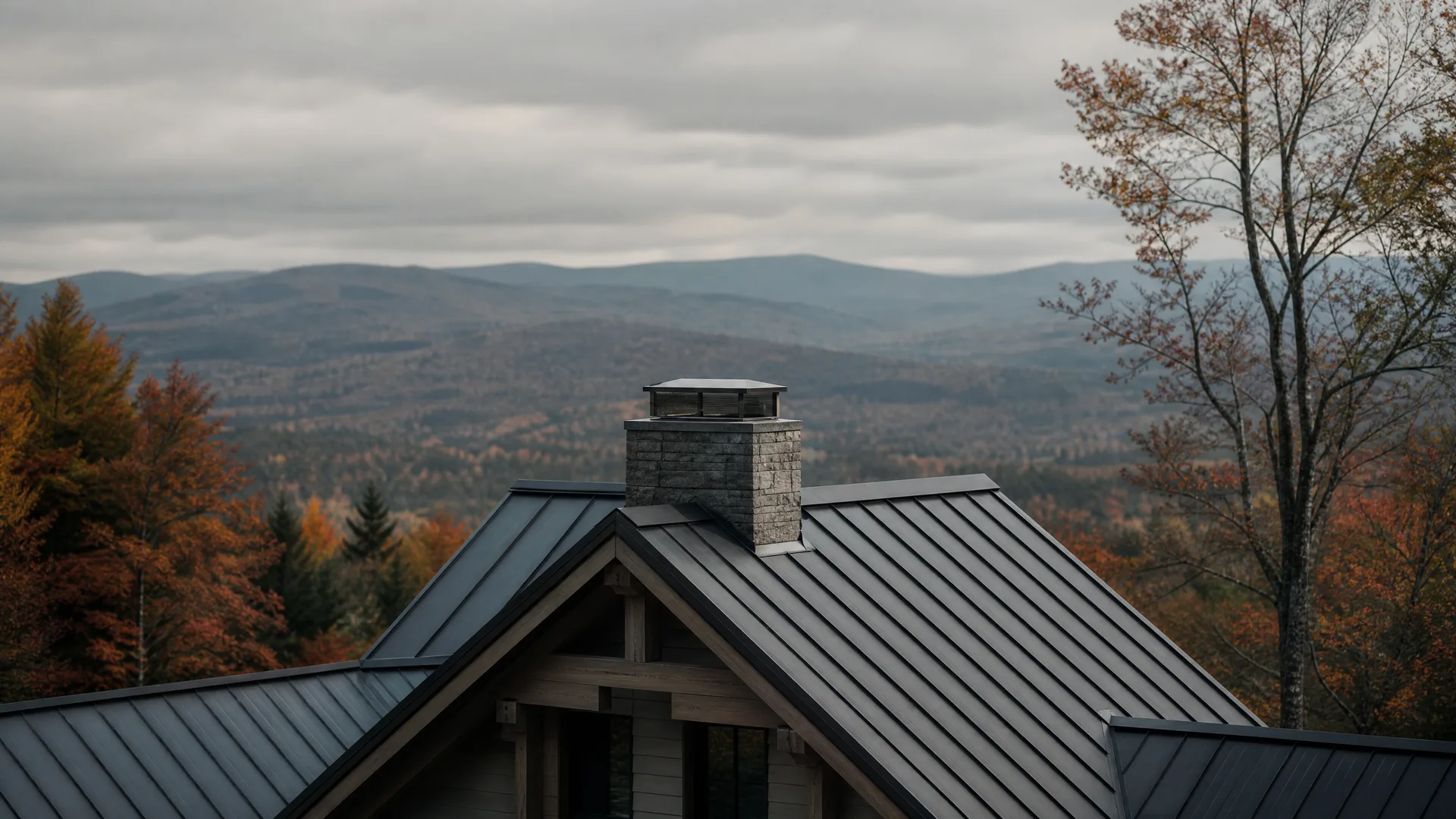
A dark standing-seam metal roof with a stone chimney and metal cap, seen against a backdrop of autumn-colored forest and layered hills under an overcast sky.

Done looking for a heat pump pro

Hand off the search

Sending the form costs nothing.

A cold house gets harder to warm back up the longer it sits, and a stuck heat pump doesn't fix itself overnight. Sending the request now gets a local technician who works on these units every winter looking at the control board and wiring before another cold morning passes.