Sized right, running quiet
A heat pump sized to your house cycles on, satisfies the thermostat, and shuts off. Through a muggy July and a cold January it holds steady, without the long runs that push up your electric bill.
 Get matched
A local installer who puts in heat pumps gets your project.
Sizing a heat pump for a Massachusetts home isn't a matter of matching tonnage to square footage. It depends on how your house holds heat in January, how much sun and humidity it takes on in July, how many people live there, and what shape your ductwork is in. Two homes on the same street can need different equipment.
That matters more here than in most states. Massachusetts winters push a heat pump hard, and most homes still lean on gas for backup or as the primary system, so the heat pump has to be sized to work with what's already in the house, not against it. Get it wrong and you end up with a unit that short cycles in the cold, or one that can't keep up when the humidity sits heavy in August.
A contractor who sizes this correctly does a load calculation on your actual house, not a guess based on its age or its square footage. That means someone looking at your insulation, your windows, your ductwork, and your electric service, since power here costs more than almost anywhere else and an oversized or mismatched system runs up that bill every month.
Finding that contractor is usually the slow part. Calling around, describing your house to five different companies, waiting on quotes that don't line up because each one measured something different. That's the part this page shortcuts. Tell it about your home once, and it matches you with a contractor who installs heat pumps sized for Massachusetts houses and has them reach out to you directly.
What follows below walks through how sizing actually works, what a load calculation looks for, and what tends to catch people off guard in a state with cold winters, muggy summers, and gas as the default heat source. Read through it, then let the button do the next part.
You want a straight number before a contractor shows up, something like 2 tons or 3 tons, so you can tell if a quote is in the right range. But a heat pump isn't sized off square footage alone, and in a Massachusetts house, winter is usually the harder test than summer, which throws off the simple rules of thumb.
A heat pump has to be sized for the day it struggles most, and in Massachusetts that's a January morning in the teens or single digits, not a muggy July afternoon. A contractor figures this with a load calculation that accounts for your insulation, your windows, your ceiling height, and the design temperature for your town. Two houses of the same square footage can need different sized units if one loses heat faster than the other. Oversizing causes its own problems: the unit short cycles, humidity stays high in summer, and the compressor wears out faster. Undersizing means it can't keep up when it's coldest, and you're leaning on backup heat more than you should.

A heat pump sized to your house cycles on, satisfies the thermostat, and shuts off. Through a muggy July and a cold January it holds steady, without the long runs that push up your electric bill.

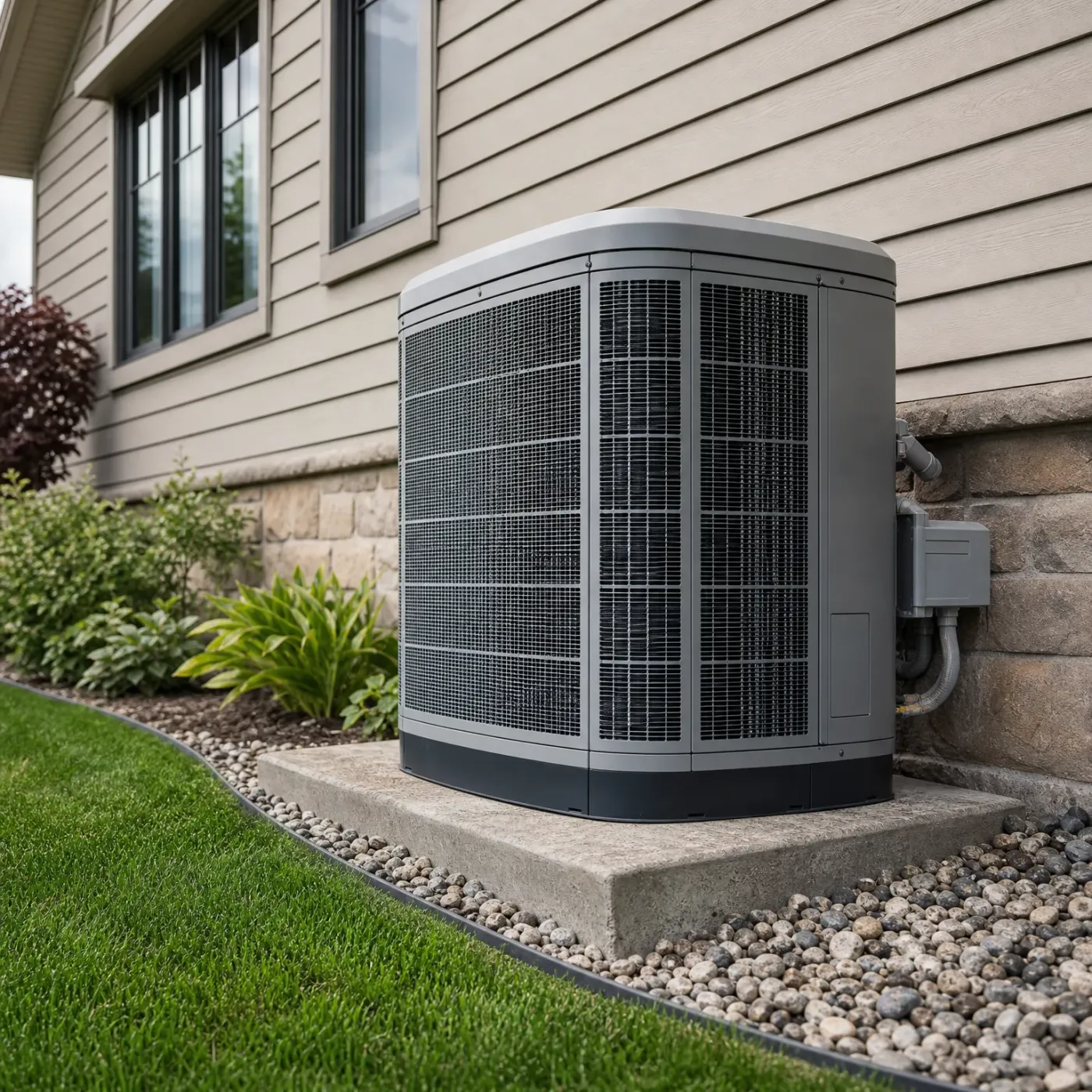
An oversized or undersized unit against bare siding like this short cycles or runs constantly. It struggles to pull humidity out in summer and to keep up when temperatures drop, and the strain shows up in what you pay to run it.




Describe your heat pump job once, to one pro.
Get in touch with a local installer about a new heat pump.
You only hire the pro if you want to.
If it's oversized, you'll notice the thermostat satisfied fast, then the system off for a long stretch, then back on again a few minutes later. Rooms feel clammy in July even though the house cools quickly, because a unit that's too big never runs long enough to pull the humidity out of the air. If it's undersized, it runs and runs on the coldest January nights and still can't quite hit the temperature you set, and your electric bill shows it. Either way, short-cycling and long, strained runs both wear on the compressor over the years, and with power rates what they are here, a unit working against its size costs you every month it runs that way.
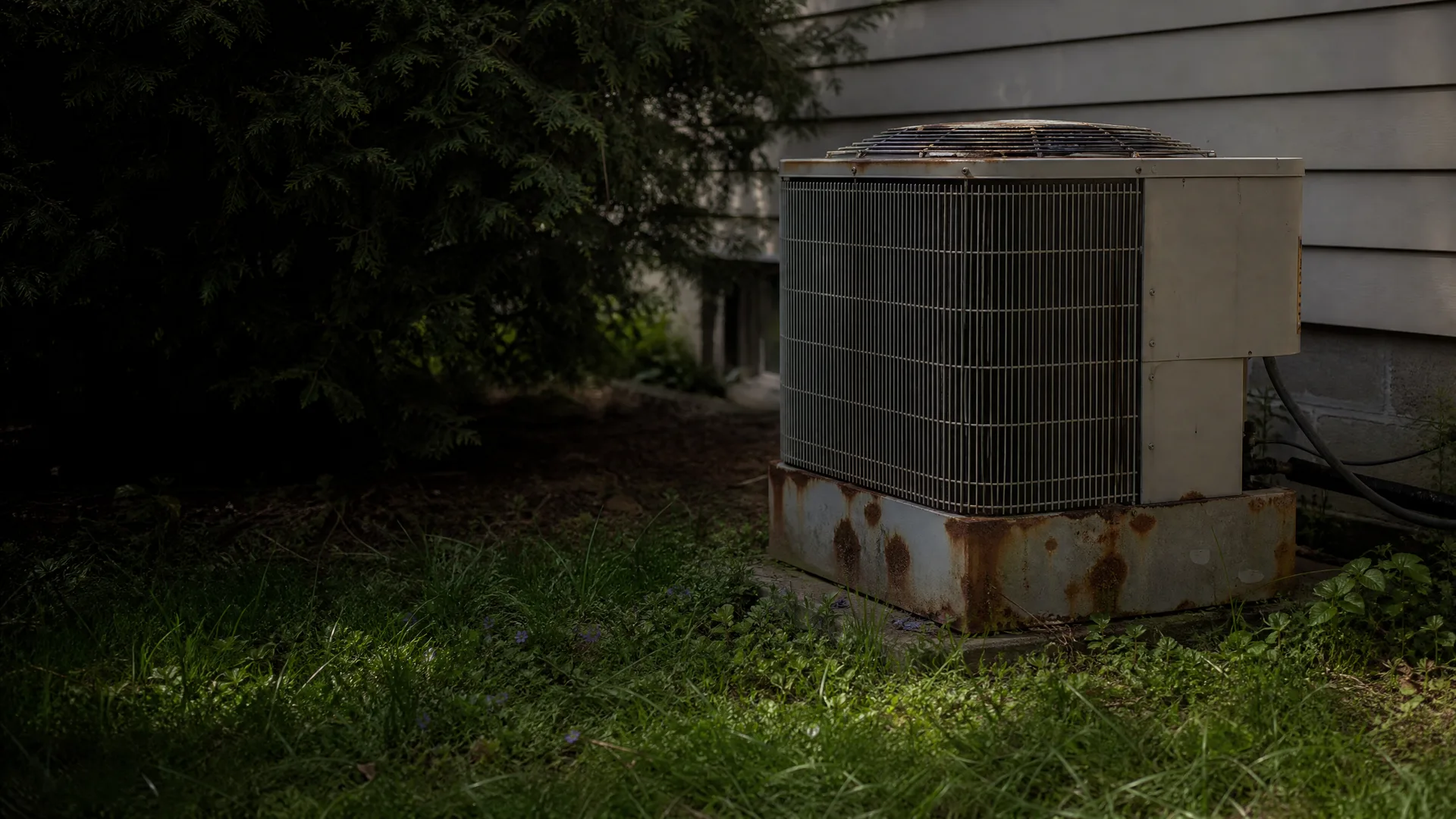
You go out to the side yard to coil up the hose and the unit catches your eye in the clear spring light. Rust has worked along the base, past the paint, and one of the fins looks bent in from last fall's leaves. It kept the house warm through January fine, but you find yourself wondering what it's costing you to do that, with electric rates what they are in Massachusetts. You crouch down and give the cabinet a knock, listen to it hum back on. Nothing wrong today. But you make a note to ask someone about it before next winter, not after.

A contractor sizing your heat pump runs a Manual J load calculation, not a tape measure around the house. It takes your square footage, but also your window count and facing, your insulation, your ceiling height, and the design temperatures for your part of Massachusetts, and works out how many BTUs your house loses on the coldest night and gains on the hottest day. From that comes a tonnage, and often a second number: how the unit performs at low outdoor temperatures, since a heat pump's output drops as it gets colder outside. A contractor checks that figure against the coldest days you actually get, not just the average winter.
None of that happens from a phone call. It takes someone walking your rooms, checking your ducts if you have them, and running the numbers for your specific house. Once you're matched with a contractor who handles installs in your area, that's the visit you're scheduling, and the load calculation is part of what they bring, not a guess they ballpark from your address.


The coil fins sit open to the air, and the disconnect box is easy to reach if a contractor needs to shut power fast. A unit kept clear like this cycles the way it was sized to, pulling humidity out of the July air and shutting off instead of straining.

Dirt has packed into the fins here, so the coil can't shed heat the way it needs to. The compressor runs longer to do the same job, which costs more on a Massachusetts power bill no matter how well the unit was sized to the house to begin with.


At 30.41 cents a kilowatt-hour, an oversized heat pump costs you more than a wrong number on a quote. Every short cycle it runs still draws power at that rate, so sizing it to your house, not just your square footage, keeps your electric bill from climbing all summer.
EIA-861 2025 statewide residential average
The size of your heat pump comes down to a Manual J calculation that accounts for your house, not a number you can pull from square footage alone. Two homes of the same size in the same town can need different tonnage once a contractor looks at your windows, your insulation, and how your ductwork moves air. Get that math wrong and you feel it both ways: short cycles that leave July rooms clammy, or long runs that strain to catch up on a cold January night. Either way, at 30.41 cents a kilowatt-hour, the mistake shows up on your electric bill long after the install truck is gone. The right size is the one that matches your house as it actually is, built and insulated the way it is, with the sun and humidity it actually takes on. That's the number worth getting right before anyone signs a quote.


A pro who works on heat pumps
Skip collecting and comparing quotes for the new heat pump.
