What defrost mode means on a Massachusetts heat pump

Step 1 of 3: Equipment

Why does my heat pump blow cold air and say "defrost" sometimes?

Cold air blowing out while the display or thermostat says "defrost" looks like a breakdown, especially when it happens on a day already below freezing. You turned the heat up, not down, and warm air stopping feels like the unit picked a strange time to quit. In Massachusetts winters, a few minutes of cold air during a defrost cycle is normal operation, not a failure.

The outdoor coil is melting off frost, and the fan shuts off or runs cold while it does

In cold weather, frost builds up on the outdoor coil the same way frost builds on the inside of a freezer. The heat pump checks for this and every so often reverses itself for a few minutes, sending heat outside to melt the frost off the coil instead of into your house. Indoors that shows up as cold air at the vents or a defrost light on the thermostat. With Massachusetts winters running well below freezing for stretches at a time, this cycle can happen often on the coldest nights. It should end on its own within ten minutes or so and go back to heating normally. If the cold air runs much longer than that, or the outdoor unit is caked in ice rather than light frost, something in that cycle isn't resetting the way it should.

A beige outdoor air conditioning condenser unit on a concrete pad beside a house with horizontal vinyl siding, with refrigerant lines and a disconnect box on the wall, surrounded by dark mulch and a green shrub at left.

Normal Defrost Cycle

The outdoor unit sits quiet, coils clear, running a normal cycle. Every so often it pauses heating for a few minutes to melt off frost, then goes right back to warming your house. The fan inside may run or stop, but it comes back to normal on its own.

An outdoor air conditioner condenser unit on a concrete pad beside a house with horizontal lap siding, with a shrub to the left, bare dirt in front, and conduit and a metal disconnect box on the wall.

Stuck in Defrost

The outdoor unit stays cold, coils caked in ice that never melts off. If defrost mode runs longer than ten or fifteen minutes, or kicks on over and over, something isn't cycling back to heat. That's a reversing valve, a sensor, or a control board worth having checked before a hard freeze finds the gap.

A woman in a gray turtleneck sweater stands by a window looking outside at snowy ground, with a dimly lit living room containing a sofa, shelves, lamp and a lit candle behind her.
A woman in a cream cable-knit turtleneck sweater stands in a warmly lit living room with a fireplace and shelves behind her, looking out a window toward snow-covered trees and a railed deck.
A woman in a cream knit turtleneck sweater stands by a window looking out at snow, with a lit fireplace, sofa and lamp in the room behind her.
A woman in a gray knit sweater sits by a window looking out at falling snow, with a dimly lit living room containing a sectional sofa, pillows, a lamp and houseplants behind her.

Frost builds up on the outdoor coil whenever it's cold and damp enough outside, which in Massachusetts is most of the winter. A sensor out there keeps watch, and once it reads enough frost, the system switches the reversing valve so it's briefly running like an air conditioner. That sends hot refrigerant to the outdoor coil instead of the indoor one, which melts the frost off. The outdoor fan stops at the same time, since there's no point blowing air across a coil that's working to heat up rather than cool down. Inside, this is the part that throws people: the air handler is getting cool or lukewarm air for those few minutes, because the system really is in cooling mode. Some systems run a small heat strip during this stretch so the air inside doesn't feel too cold. Once the coil is clear, the valve flips back, the outdoor fan comes back on, and the system goes right back to heating the house. The whole thing is a normal part of how a heat pump handles cold air, not a sign anything's wrong.

What Defrost Mode Actually Does

  • A sensor on the outdoor coil tracks temperature and tells the system when frost has built up enough to matter.
  • The reversing valve flips so the system runs in cooling mode for a few minutes, sending hot refrigerant outside to melt the frost off the coil.
  • The outdoor fan shuts off during this flip so it isn't blowing cold air across a coil that's trying to heat up.
  • Because the system is briefly in cooling mode, the indoor air handler can put out cool or lukewarm air instead of warm.
  • A small heater or heat strip often kicks in during this stretch to keep the air from feeling too cold inside.
  • Once the coil reads clear, the valve flips back, the outdoor fan restarts, and the system returns to heating your house.
An outdoor air conditioning condenser unit on a concrete pad beside a house with horizontal siding above a brick foundation, with a flexible conduit running to a wall-mounted disconnect box.
Before you get your heat pump repair
An outdoor condenser unit on a concrete pad beside a gray lap-sided house, with an electrical disconnect box and conduit on the wall and shrubs with mulch to the right.
After you get your heat pump repair

Under 32°F outside

This is when frost forms on the outdoor coil and defrost cycles start. Below freezing, expect them every so often. That's normal, not a fault.

Find my pro

Over 10 minutes

A defrost cycle that runs this long without switching back to heat points to a stuck reversing valve or a bad sensor, worth having checked.

Find my pro
A man in a dark blue shirt stands in an open front doorway of a stucco and wood-clad house, facing a blond woman seen from behind in the foreground on a stone walkway.

What a stuck defrost cycle costs you in January

Massachusetts power rates are high, and a heat pump that won't come out of defrost is heating outdoor coils instead of your living room. Run the backup strip heat at the same time, as a lot of systems do automatically, and that stacks on top of it. You'll see it on the bill before you see it anywhere else, since the thermostat will still claim the house is being heated.

If you heat with gas like most homes around here and keep the heat pump for shoulder months or as backup, a cycle that won't reset might sit unnoticed longer, since the gas furnace is doing the real work anyway. That's its own problem. Catching it now, while it's a sensor or a valve, costs you a lot less attention than catching it in February when you actually need the heat pump running. Send in what you're seeing and a contractor who works on heat pumps in your area will follow up, so you're not the one tracking down who's free and who answers the phone.

Interior corner of a dining room with a round wooden table, a ceramic vase holding olive branches, a dark spindle-back chair near a curtained window, and a sideboard with a lamp against beige walls.
An outdoor condenser unit encased in thick ice stands on snow beside a house with horizontal siding and exterior pipes, with bare trees and a sunset glow in the background.

Six in the morning, still dark, and you go out for the trash before work. The side yard is quiet except for the heat pump, and it's not running quiet, it's not running at all. The outdoor unit is sealed in ice, a thick white shell over the coil and the fan grille, icicles hanging off the bottom edge. Inside, the house has gone cold enough that you noticed it from bed. You stand there in your coat with the lid in your hand, looking at it. It's supposed to clear itself. This one hasn't moved in a while. You go back in, and before you deal with anything else, you send off the form and let someone who does this for a living take it from here.


Get your heat pump to the right pro

Get the heat pump repair search off your mind today.

Asking costs nothing, and the choice to hire stays yours.

Living with normal defrost cycles

A normal defrost cycle costs you nothing to live with. The system handles it on its own, usually in under ten minutes, and you get your heat back without doing anything. Some homeowners notice a puff of steam or mist rising off the outdoor unit as the frost melts and drips off. That's the system working the way it's built to. You don't need to clear snow off the unit during a normal cycle, and you don't need to shut anything down. The only thing worth doing is glancing at the outdoor unit now and then on a cold morning, just to see that it runs, pauses, and comes back to heating like it's supposed to.

Living with a stuck defrost cycle

A stuck cycle is a different situation, and it asks more of you. The backup heat strips may be running to cover the gap, and in Massachusetts that shows up on your electric bill fast. The outdoor coil stays iced over instead of clearing, which means less heat gets into your house the longer it sits. Letting it ride through a cold snap risks the compressor, not just the comfort. This is the kind of thing worth catching early rather than waiting on, since a repair now is smaller than what happens if the unit keeps trying to run iced over through a hard freeze.

Power costs 30.41 cents per kilowatt-hour statewide

At 30.41 cents per kilowatt-hour, every extra minute your heat pump spends stuck in defrost, running backup strip heat instead of switching back to warming your house, shows up on the bill. A cycle that won't release is worth fixing fast, not riding out.

EIA-861 2025 statewide residential average

Waiting it out yourself

You can keep watching the outdoor unit and timing the cycles with your phone. If it switches back to heat inside ten minutes, you've answered your own question and spent nothing. If it doesn't, you're now into a second or third round of checking, the strip heat is running, and the house still isn't warm. Every check you do by hand means more time on backup heat before anyone qualified looks at the unit, and at Massachusetts power rates that adds up fast while you're still not sure what's wrong.

Getting a contractor out

Once you send the form, you're done watching the clock on it. A contractor who works on heat pumps can tell within a few minutes whether the defrost sensor, the reversing valve, or something else is the problem, and fix what the ice buildup already told you was wrong. You stop guessing at cycle times and stop running backup strip heat any longer than it takes someone to get there. The part you were doing, figuring out if this is normal or not, becomes someone else's job instead of yours.

A bearded man in a plaid flannel shirt stands indoors looking out a frost-covered window, with a steaming dark blue mug on the wooden sill and snow-covered trees outside.
A man in a blue T-shirt sits on a light gray sofa, laughing while looking at an open laptop in the foreground, with a framed picture, lamp and potted plant behind him.
A single-story house with light gray horizontal siding, dark gray shingled gables, black shutters and a dark front door, fronted by a mulched bed of small shrubs and a large lawn under a clear blue sky.

Massachusetts summers run sticky, with a dew point averaging 60°F across June, July and August, based on NOAA climate normals. Your heat pump runs the reverse of its winter job then, pulling heat and moisture out of the house. That humidity load is part of why the outdoor coil picks up frost once the weather turns cold enough to need defrost cycles at all. A system that's been working hard all summer pulling moisture out of sticky air isn't getting a break in winter either, so if the compressor or reversing valve is already worn, defrost problems tend to show up as the cold sets in.

NASA POWER T2MDEW county cells weighted by homes

A normal defrost cycle needs nothing from you. It runs, it clears the coil, it switches back, and your house stays warm the whole time. What's worth acting on is the cycle that won't let go: ice building on the outdoor unit, the system stuck blowing cold for longer than ten minutes, backup strip heat running up your bill while the house still feels cold. You don't need to keep walking outside to check the coil or time another cycle on your phone. Send the form, and finding the right contractor to look at your heat pump stops being something you have to figure out yourself. A stuck defrost cycle in a Massachusetts winter isn't something to ride out for weeks while you watch the outdoor unit through the window. Once someone's looking at it, you're done carrying this one around.

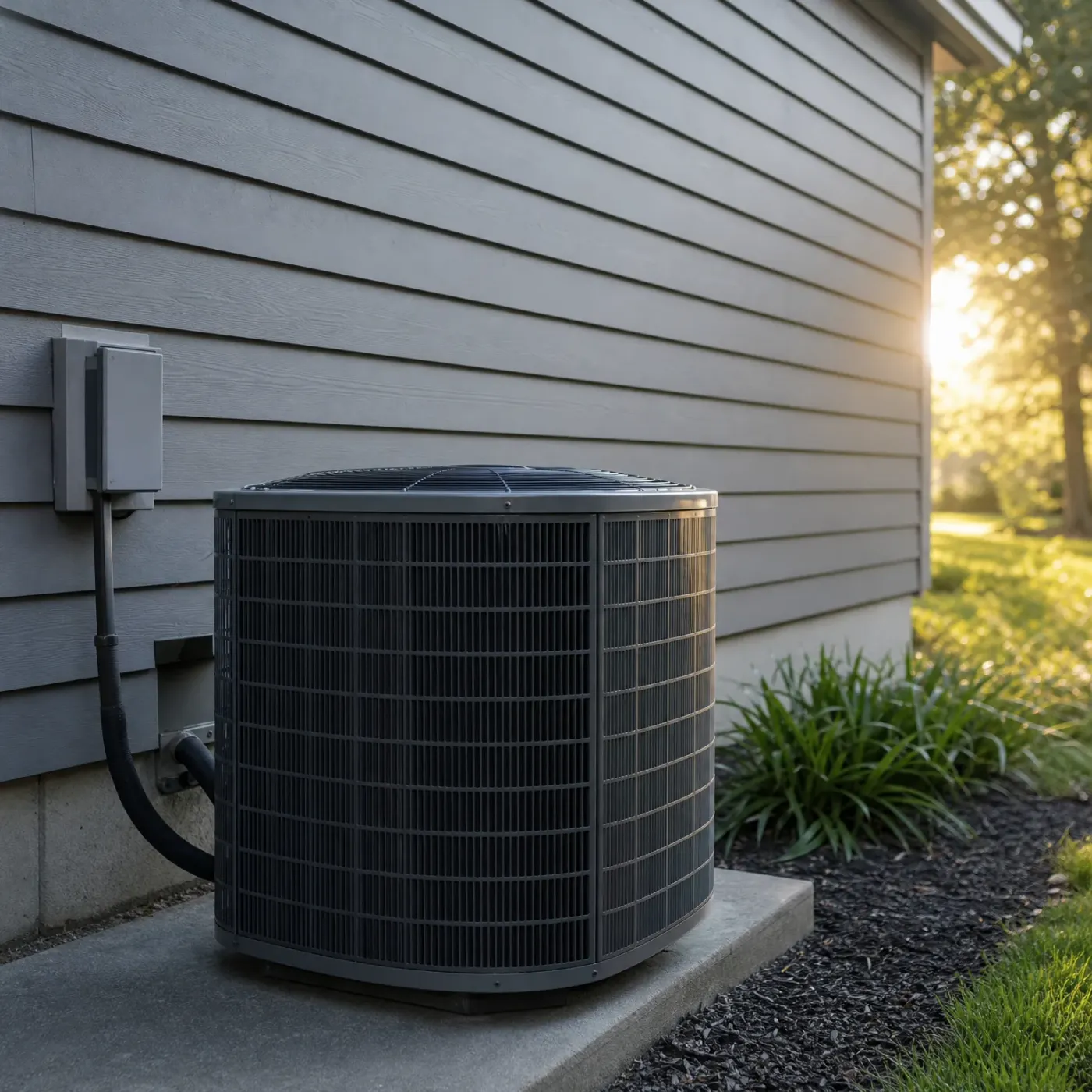
An outdoor air conditioner condenser unit on a concrete pad beside a gray horizontal-lap-sided house, with an electrical disconnect box and refrigerant line on the wall, grass, shrubs and a tree with low sun behind.

The right pro for this job

Connect with a pro

Once you send the form, finding a pro is off your list.

No fee to send it, and nothing to sign.