10 years
Past this age, repair costs start competing with replacement cost. A heat pump installed new gets you current efficiency built for Massachusetts winters, not just a patched-up system.

Most of the time a heat pump is worth repairing. If the compressor is still good and the system is less than ten years old, fixing whatever broke is usually the cheaper path, even with a couple of expensive parts in it. What changes the math in Massachusetts is winter. A heat pump here works hardest in January and February, pulling heat out of cold outdoor air, and that strain shows up as frost that won't clear, short cycling, or a unit that runs constantly but can't keep the house warm. If that's happening every winter and not just this one, or if the system is older and the repair bill is climbing toward what a new unit costs, replacing it stops being a loss and starts being the fix. A heat pump that struggles through one Massachusetts winter usually struggles through the next one too.


A heat pump doesn't make heat, it moves it. Refrigerant and a reversing valve let the system pull warmth out of outdoor air in January and send indoor heat outside in July, which is why the same unit handles both jobs. When outdoor temperatures drop near freezing, the outdoor coil picks up frost, and the system briefly reverses itself to melt it off. That's normal, not a sign of trouble. On the coldest days, when the outdoor air doesn't have much heat left to pull, electric strips or a backup furnace kick in to cover the gap. Snow or ice piled against the outdoor unit blocks it from doing any of this, since a buried coil can't draw heat from the air. A refrigerant leak tends to show up as ice on that same outdoor unit, paired with heat and cooling both running weak. And if the system cools fine in summer but won't blow warm air come winter, the reversing valve is often the part that's failed.




Past this age, repair costs start competing with replacement cost. A heat pump installed new gets you current efficiency built for Massachusetts winters, not just a patched-up system.
Most Massachusetts homes heat with gas, so a heat pump installed with the right backup setup keeps you warm even when it has to work hardest.
You notice it most on the cold mornings. The air coming out feels lukewarm instead of warm, or the system runs and runs without the house ever quite reaching the temperature on the thermostat. Maybe the backup heat kicks on more than it used to, and you can hear it, or feel it in the electric bill. Outside, the unit might be icing up and not clearing itself the way it should. Some households notice a breaker tripping, or a smell when the system starts. None of this means you're stuck without heat, but a system that's straining to keep up in January is also costing more every month it runs that way, and the strain tends to get worse before it gets better.

Summer air in Massachusetts carries a dew point around 60°F on average across June, July and August, per NOAA climate data. That's the sticky kind of heat, the kind where the air itself feels thick. Your heat pump has to pull more moisture out of the house to make it feel comfortable, not just drop the temperature, and that extra wringing-out is what makes the compressor run long stretches instead of short ones. If yours is already struggling, a muggy stretch is when you'll notice rooms staying damp and the system never quite shutting off. Once you send the form, you're done hunting for someone to look at it. No calling around, no repeating the problem to three different contractors. That part is off your plate.
NASA POWER T2MDEW county cells weighted by homes
Explain the job once and skip repeating it on every call.
Sending the form costs nothing.

A heat pump under ten years old with a sound compressor is usually worth fixing. A bad capacitor, a failed reversing valve, a low refrigerant charge from a slow leak, these are repairs a licensed contractor handles in a visit or two. You get back to normal temperatures without paying for a new system, and the one you have keeps running through the rest of this winter and next summer's humidity.
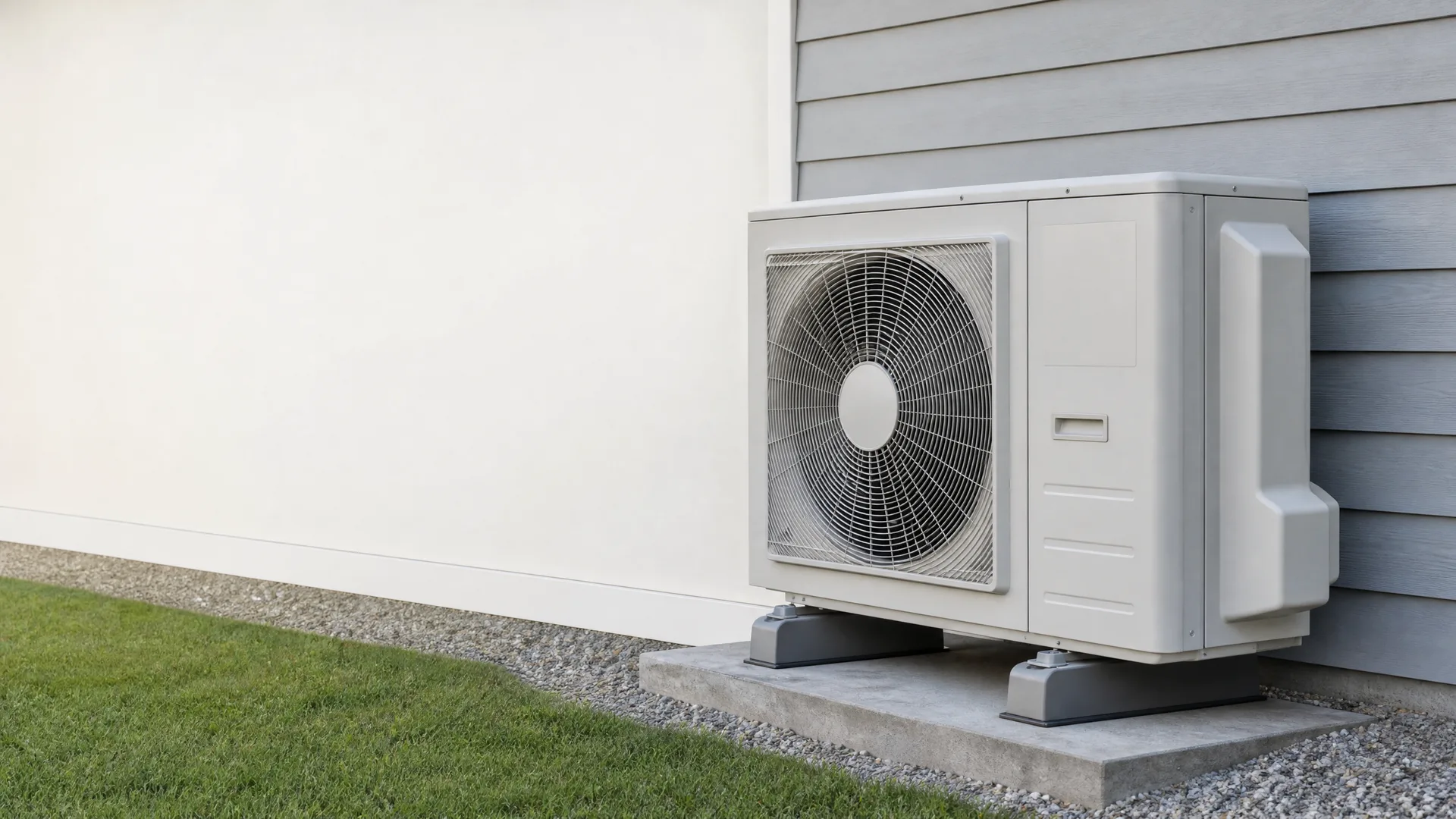
Past ten years, or with a compressor that's failing, repair money starts going into a system near the end of its life anyway. A new heat pump sized and installed for Massachusetts winters runs on current efficiency instead of a patched-up unit losing ground. If your backup heat is also aging, replacing both at once avoids paying for labor twice when the second one fails a year or two later.
Your heat pump kicks on backup heat strips sometimes, and you're wondering if that means something's wrong, or if it's just how the system handles a Massachusetts winter. The electric bill spike makes you suspicious it's running more than it should.
A heat pump pulls warmth from outdoor air, and the colder that air gets, the less heat it has to give. Somewhere in the teens or single digits, most heat pumps can't keep up with the house on their own. The backup strip is electric resistance heat, built into the air handler, and it kicks in to cover that gap. It's not a sign of failure. It's the system doing what it was designed to do on the coldest nights. What's worth watching is how often it runs. If it's kicking in on a 40 degree day, something else is wrong, low refrigerant, a failing compressor, or a thermostat setting pushing it on too soon.
Refrigerant absorbs heat from outdoor air through the outdoor coil.
The compressor presses the refrigerant to raise its temperature further.
Hot refrigerant moves inside and releases that heat through the indoor coil.
The reversing valve switches refrigerant flow to cool the house in summer.

If your heat pump is struggling, you're probably already running the backup heat strips more than you'd like, and that shows up on a power bill in a state where electricity isn't cheap. A system that short-cycles or runs constantly is pulling power the whole time it's doing it. Left alone, a failing compressor or a slow refrigerant leak doesn't fix itself. It gets worse, usually in the middle of a cold snap when you need the house warm and have no patience left for troubleshooting.
Finding the right contractor takes time you may not have when the house is cold. You'd be searching reviews, calling around to see who can even look at it this week, explaining the same symptoms to three different companies, then trying to compare quotes that aren't quite for the same work. Send the form here and that part is handled. You explain it once, and a licensed Massachusetts contractor takes it from there.

At that rate, every hour your backup strips run instead of the compressor costs you. A heat pump that's slipping leans on those strips more and more, and in Massachusetts that difference shows up fast on the bill.
EIA-861 2025 statewide residential average
Age and the compressor decide most of this. A heat pump under ten years old with a compressor still working right is almost always worth fixing, whatever the repair is. Past ten years, the math shifts. Enough money goes into keeping an old unit running that a new system, built for what Massachusetts winters actually demand, starts to make more sense than the next repair bill. The signs that you're closer to that second case show up on their own: backup strips kicking on more than they used to, cycles that run long without the house catching up, a breaker that trips for no obvious reason. Each one points the same direction. None of them are free to ignore, either, not with what electricity costs here. A heat pump leaning on backup heat through a Massachusetts winter runs up a bill that gets harder to justify the longer it goes on. What you actually need is someone looking at the unit itself. A licensed contractor can check the compressor, trace whatever's causing the symptoms, and tell you in that same visit whether you're looking at a repair or a replacement, and what either one involves. That answer is specific to your system, not a general rule. The one thing working against you is time. Finding that out during the first cold snap gives you choices. Finding it out during the coldest week of January, with the house not heating and a backup strip running nonstop, does not.


A heat pump under ten years old with a sound compressor is worth fixing. Past that age, or if the compressor's gone, a new system built for Massachusetts winters is the better bet, especially with electric rates what they are here. Either way, the part that's yours to skip is finding someone to look at it. Send the form and you're done hunting for a licensed contractor, calling around for quotes, and explaining the same problem three different times. Someone reaches out, looks at your system, and tells you straight whether it's a repair or a replacement.
Skip searching for a heat pump pro and answer a few questions instead.
You're not committing to anything by asking.