
Running clean
A heat pump like this, set on its pad with clear airflow on all sides, can pull heat out of cold air all winter and still cool the house when summer gets sticky. The coils stay open, so the unit isn't working harder than it has to.
You already took the leap and put in a cold-climate heat pump, and now a January night below 20 degrees has you wondering if it was the right call, or if you're about to find out the hard way that it can't keep up and you'll be stuck running expensive backup heat all winter.
A cold-climate heat pump is built to keep pulling heat out of outdoor air well below freezing, down to near zero or lower depending on the model, which is the whole point in a Massachusetts winter. Most homes here still heat with gas, and electricity costs more per kilowatt-hour than in most of the country, so the math only works if the unit was sized for your house and the installer set it up to run efficiently instead of leaning on electric resistance backup on the coldest nights. Done right, it heats through the winter and then covers the muggy stretch of summer with the same equipment. Done wrong, meaning oversized, undersized, or left with the backup heat doing too much of the work, the electric bill tells you fast.
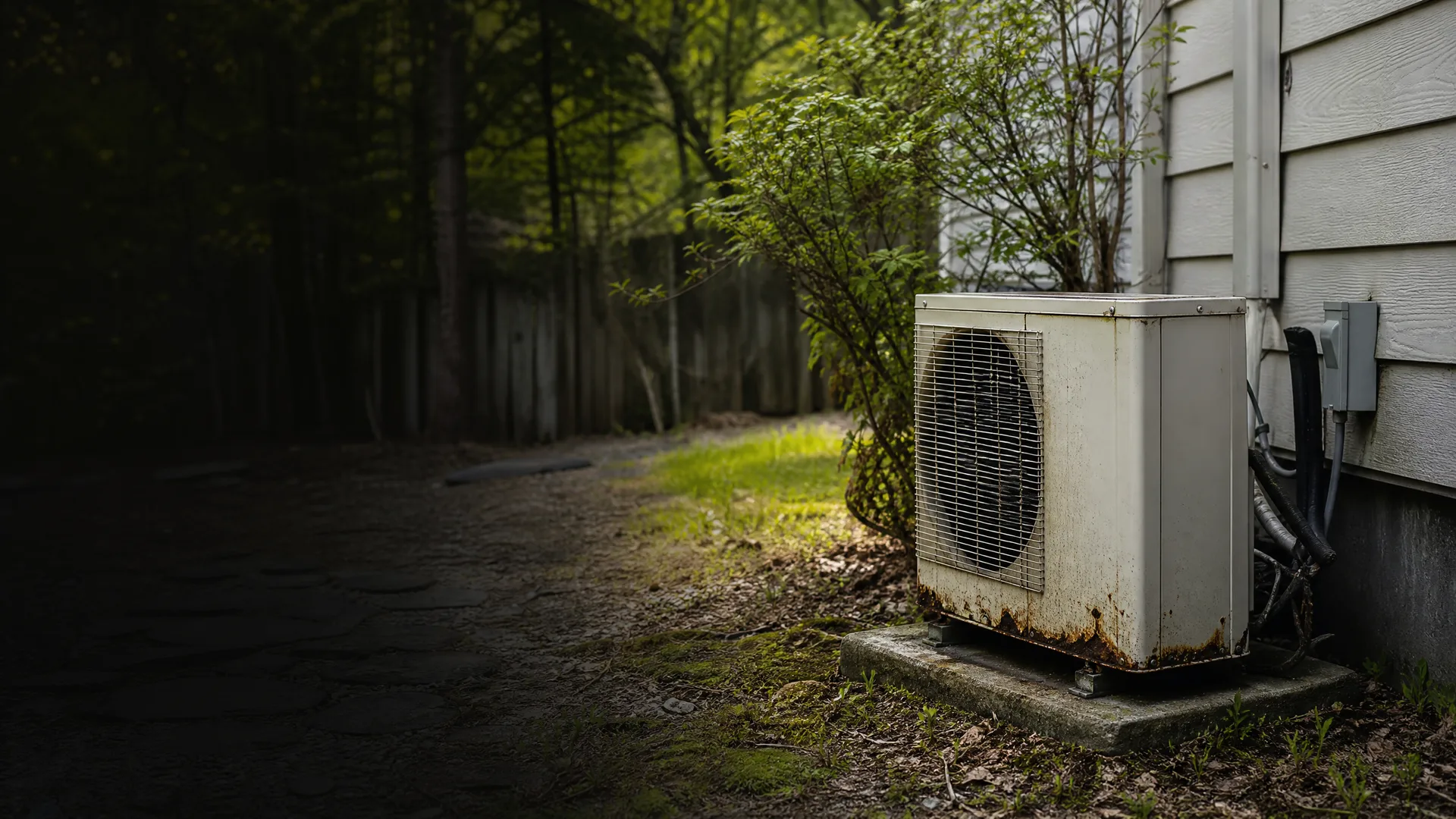
You're out in the side yard in March, coiled hose still looped on its hook, and the snow along the fence line has finally gone soft and gray. The outdoor unit catches your eye the way it hasn't all winter, you were too busy listening to it run through those cold nights to look at it. Now you see the rust creeping along the base, a thin orange line where the metal meets the ground. You crouch down and touch it. It held up through another Massachusetts winter, blower working hard on the worst nights, and it got you through. But rust at the base isn't nothing, and you find yourself wondering how many more winters this one has in it.
You notice it most on the coldest mornings. The unit outside is running almost constantly, and you find yourself checking the thermostat to see if the house is actually holding 68. Maybe the air coming out of the vents feels cooler than you'd like, and you catch yourself reaching for a sweater indoors or bumping up the backup heat. You might hear the outdoor unit humming for long stretches, or notice frost building up on it that doesn't seem to clear on its own. None of that means something is wrong. A cold-climate heat pump works harder below freezing, and how it handles those stretches is exactly what decides whether it's carrying your winter or just adding to your gas bill as backup.

A heat pump like this, set on its pad with clear airflow on all sides, can pull heat out of cold air all winter and still cool the house when summer gets sticky. The coils stay open, so the unit isn't working harder than it has to.

Dirt and leaves packed into the fins like this cut off the airflow the unit needs to move heat either direction. In a cold snap, a heat pump already working hard to heat the house has no business fighting through this too.



This is a cold-climate heat pump doing what it's built for, pulling heat out of winter air and running the lines straight into the house. With open space around the cabinet and clean refrigerant lines, it can hit its rated output on the coldest nights and still handle a muggy July.

A dirty grille like this blocks the airflow the unit depends on to pull heat from cold air. It has to run longer to make the same heat, and in a Massachusetts winter that shows up fast on an electric bill that's already among the highest in the country.



Send the form and the search for an installer is over.
Get in touch with a local installer about a new heat pump.
You only hire the pro if you want to.





A 60°F summer dew point, averaged across June, July and August over where homes sit in Massachusetts, is the sticky kind, the kind where shirts stick to your back on the porch. That same heat pump pulling heat out of January air has to pull moisture out of August air, and the two jobs aren't the same load on the system. Humid air makes the unit run longer to wring out the water along with the heat, so don't be surprised if it cycles on more through a muggy stretch than the thermostat setting alone would suggest. Source: NOAA climate normals.
NASA POWER T2MDEW county cells weighted by homes


A cold-climate heat pump installed and sized right for your house will keep pulling heat out of January air and still handle a sticky Massachusetts summer, and it will do it against some of the highest electric rates in the country. Whether it's worth it comes down to the install itself: clearance around the unit, a charge that matches the lines, and output sized for the coldest nights you actually get here, not just the average ones. A unit boxed in or undersized will leave you cold and guessing in February no matter what the spec sheet promised. If you're not sure yours is set up that way, that's worth sorting out before next winter rather than during it. Send in what you're dealing with and a contractor who works on cold-climate systems in Massachusetts will reach out to look at your setup. Once that's sent, you're not the one tracking down who to call. That part is off your plate.




Send the form and stop researching installers for the new heat pump.
Asking costs nothing, and the choice to hire stays yours.