

How long heat pumps last in Massachusetts
A heat pump in Massachusetts lasts about 15 years, sometimes close to 20 if it's been sized right and kept up. What shortens that is the winter. A heat pump has to pull heat out of cold outside air, and the colder it gets, the harder the compressor works, and the more it depends on defrost cycles to clear ice off the outdoor coil. A system that runs through a Massachusetts winter season after season is working harder than the same unit would in a milder climate, and that shows up over time in wear on the compressor. Most homes here still heat with gas, so a lot of these heat pumps are doing cooling duty in the muggy summers and backup or supplemental heat the rest of the year, which changes how many hours they rack up. Either way, 15 years is the number to plan around, not a guess to hope past.






A heat pump doesn't make heat the way a furnace does. It pulls heat out of the outside air, even when that air is cold, and moves it inside. That takes more work the colder it gets, so through a Massachusetts winter the compressor runs long stretches at low output rather than cycling on and off like it does in summer. Once the temperature drops into the 20s, most units bring on electric heat strips to help keep up, and those pull a lot of power. The reversing valve is what flips the system between heating and cooling, and because it has to make that switch every spring and fall here, it takes more wear than it would somewhere that only runs air conditioning. Cold, damp air also builds frost on the outdoor coil, so the unit periodically reverses itself for a few minutes to melt that ice off before going back to heating. A dirty coil or a blocked sensor makes those defrost cycles run longer and more often, and that adds hours onto the compressor over a season. The blower inside is working the whole time too, pushing air across the coil, and a clogged filter makes it strain to do the same job.
How a heat pump works all winter
- A heat pump's compressor runs almost constantly in a Massachusetts winter, since it has to run longer at low output to pull heat out of cold air than it does to push heat out in summer.
- Below about 20 to 30 degrees, most heat pumps switch on backup electric resistance heat strips to keep up with the house, and those strips draw a lot of power.
- The reversing valve is what switches the system between heating and cooling, and because Massachusetts asks it to flip with the seasons every year, that valve sees more wear here than it would somewhere that only cools.
- Frost forms on the outdoor coil in cold, damp weather, so the unit runs a defrost cycle that briefly reverses itself and blows cool air inside to melt the ice off.
- A dirty outdoor coil or a blocked defrost sensor makes the unit run longer defrost cycles more often, which adds hours to the compressor's workload over a winter.
- The indoor air handler's blower moves air across the coil nonstop through the cold months, and a clogged filter forces that motor to push harder for the same airflow.


Every degree the temperature drops, your heat pump has to work harder to pull heat out of the air outside, and Massachusetts winters push that compressor to its limit for months at a time.
That strain adds up year after year, so a heat pump sized wrong for your house or run without regular service is the one you'll be replacing well before 15 years are up.
Power costs 30.41 cents per kilowatt-hour statewide
At 30.41 cents a kilowatt-hour, every hour your compressor spends struggling in the cold shows up fast on your bill. A heat pump that's sized and installed right keeps that backup electric heat off longer, which matters more here than almost anywhere else.
EIA-861 2025 statewide residential average
What you'll notice first
The backup heat kicks in more than it should. You'll hear it in a cold snap: the system runs and runs, and the air coming out doesn't feel as warm as it used to. Your January and February bills climb past what they ran the winter before, even though you haven't changed the thermostat. Rooms farther from the unit take longer to come up to temperature. None of this means the heat pump has failed. It means the compressor is working past what it was built to handle, and that shows up as cost and comfort before it shows up as a breakdown.
What a short life costs you
A heat pump that wears out at 10 or 12 years instead of 15 or 20 means another installation inside a decade, on top of the power it burned leaning on backup heat through winters it should have handled on its own. In Massachusetts, where electricity runs among the highest rates in the country, those extra hours of strain aren't a minor add to the bill, they're the difference between a system that pays for itself and one that doesn't. Sizing and installing it right the first time is what stands between those two outcomes.


Get your heat pump to the right pro

Skip the round of in-home estimates for a new heat pump.
No fee to send it, and nothing to sign.
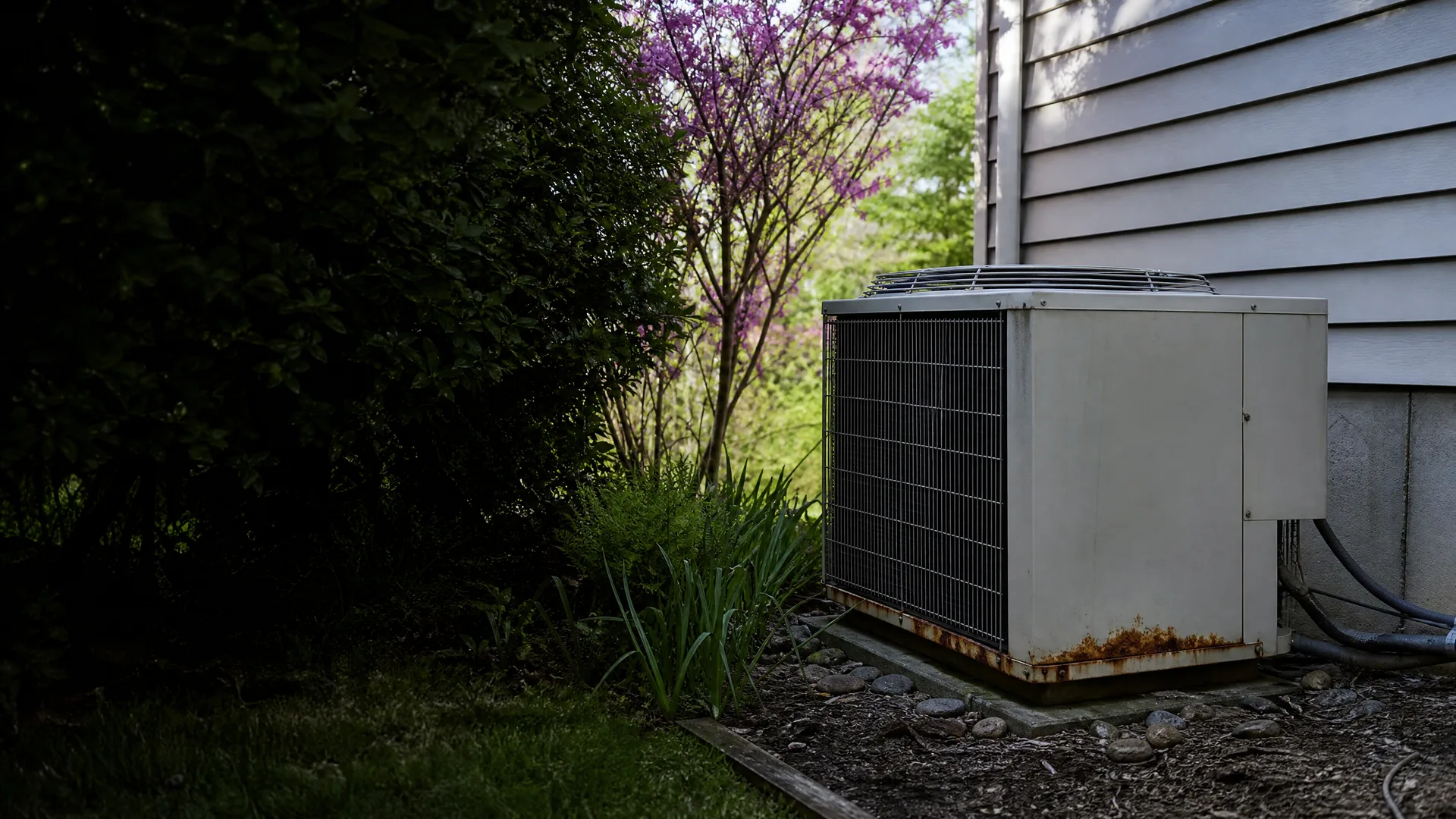
You're out in the side yard in April, coiling up the hose, and you notice the outdoor unit sitting there in the thin spring light. Rust has crept along the base, flaking where the metal meets the ground. It made it through another winter, but you can see what that winter cost it. You crouch down and the rust comes off on your fingers. You think back to February, to how long the system ran each time the temperature dropped, how the air never quite felt warm enough. Standing there, you do the math on how many more Massachusetts winters a unit this far gone has left in it.
Why does a heat pump wear out faster in Massachusetts than in a milder climate?
You've seen heat pumps hold up longer in other parts of the country, maybe at a relative's place in a milder state, and you're wondering why yours is expected to wear out sooner here. It's a fair question. The machine is the same machine. What's different is what Massachusetts asks of it every winter.
The compressor runs harder, longer, and more often here
A heat pump moves heat, it doesn't make it, so in winter it has to pull warmth out of outside air that's often in the 20s or colder. The colder that air gets, the less heat there is to pull, and the compressor has to run longer and work harder to make up the difference. In a mild climate, where winter lows stay closer to 40, the compressor barely strains. In Massachusetts, it's doing that heavier work for months at a stretch, often cycling into backup electric heat on top of it. That extra load year after year wears the compressor down faster than it would in a place that never asks that much of it.

Summer dew points here average 60°F across June, July and August, according to NOAA. That's heavy, sticky air, and your heat pump has to wring the moisture out of it as well as cool it down. On the muggiest stretches you'll notice the system running longer than the thermostat setting seems to call for, because pulling that much water out of the air takes real time. It also means the coil stays wet more of the summer, which gives dirt and mildew more chances to build up on it. A coil that's caked with grime can't shed heat the way it should, so the compressor behind it works harder for the same result.
NASA POWER T2MDEW county cells weighted by homes
Keep It Running or Replace It
Keep it running
- A heat pump that's maintained and not oversized on backup heat can get close to 20 years even with Massachusetts winters pulling on the compressor.
- You avoid the cost and disruption of a mid-winter breakdown, since a failing compressor tends to show its age during the coldest stretch, not the mildest one.
- Parts for the unit you already know, matched to your ductwork and electrical setup, stay available as long as the manufacturer supports that model.
- You put off the work of comparing installers, checking licenses, and sitting through quotes for a system that's still doing its job.
- A unit that's been serviced regularly gives you some warning, through rising bills or longer run times, before it fails outright.
Replace it now
- A new heat pump sized correctly for your house won't lean on backup electric heat as hard, which matters at 30.41 cents a kilowatt-hour.
- You stop paying to keep an aging compressor alive through winters that are already harder on it than a milder climate would be.
- A unit nearing 15 years is close to the point where most heat pumps in this climate start needing more frequent repairs.
- You skip the back-and-forth of calling multiple contractors and re-explaining the same problem, and get matched with one who can look at your specific setup.
- Installing now means sizing the new system for how cold it actually gets here, rather than inheriting whatever the last one was built for.
- A newer unit is less likely to leave you without heat during a cold snap, when finding same-day help is hardest.

Running on the original system
A heat pump that's never been replaced keeps asking more of a compressor that's already worn. You turn the thermostat up on a cold night and wait longer than you used to for warm air. Backup heat carries more of the load than it should, and gas or oil bills climb to cover what the heat pump can't. You're also stuck sorting through contractors on your own: calling around, explaining the system's history over and over, comparing quotes with no way to tell which one actually fits your house.

Matched with the right installer
Once you're matched with a contractor who installs heat pumps in Massachusetts homes, the legwork is done. No more searching through listings or repeating the same story to every company you call. The contractor sizes the new system to your house and the winters it has to handle, then reaches out to go over what that looks like for you. You still have to decide and schedule the work, but you're not the one tracking down who can even do it.

Fifteen years, maybe close to twenty, if the winters haven't worn it down early
A heat pump in Massachusetts earns its keep, but the cold and the humidity both take a toll on it, and most don't make it to twenty without help along the way. You know by now whether yours is running harder than it should, whether the backup heat comes on too soon, whether the bill in February tells a different story than it used to. That's the system talking to you.
Figuring out whether your unit is worth repairing again or ready to be replaced isn't something you have to work out alone, and it isn't something you have to do by calling around to a handful of installers and explaining the same thing five times. Answer a few questions about your place and your system, and a contractor who works on heat pumps in Massachusetts winters will reach out and look at what you've actually got.






The right pro for this job
Describe the project once instead of to every installer.
Sending the form costs nothing.