


A unit that's keeping up
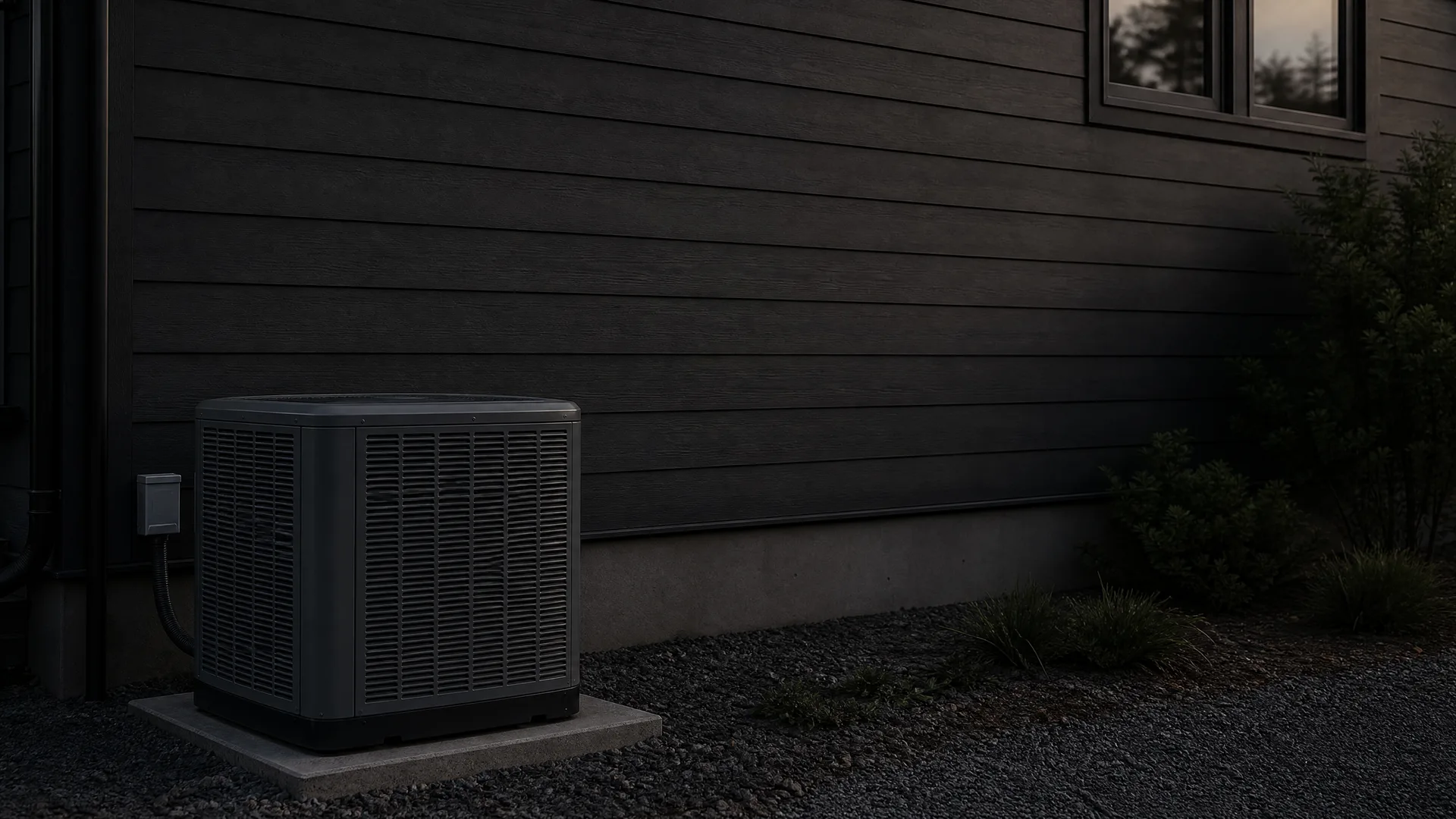
Clear coil fins, a solid concrete pad, lines and conduit running clean to the wall. Air moves through the coil the way it should, so the unit pulls what heat it can out of the cold and sends it inside without extra strain.
Skip the round of in-home estimates for a new heat pump.
Describe it onceA lot of winter nights in Massachusetts drop well below freezing, and once that happens you start watching the thermostat, wondering if the heat pump is still doing its job or just running without keeping up. With most homes here on gas as backup or as the main system, you want to know the actual point where a heat pump stops carrying the load on its own.
A heat pump works by pulling heat out of the outside air, and the colder that air gets, the less heat there is to pull. Below about 5 degrees, older and mid-range units start falling behind on cold Massachusetts nights, and a backup heat source has to pick up the difference. Newer cold-climate heat pumps hold their output much further down, some well below zero, which matters here since nights in the teens and single digits happen most winters. If your system was installed before cold-climate models became common, or you're not sure which kind you have, that's the detail that decides whether a January cold snap is routine or a problem.





When the temperature outside drops into the teens or lower, you'll feel it first as longer run times. The air coming out of the vents gets cooler, and the system has to run more to keep up. In most Massachusetts homes with a heat pump, there's a backup heat source that kicks in to cover the gap, and that's normal. What's worth watching is whether the house keeps pace or starts losing ground room by room. If your bedroom is still cold at 68 on the thermostat, that's a sign the system is undersized for what this winter is asking of it, or that the backup isn't switching on when it should.
Since most homes in Massachusetts heat with gas, if your setup pairs a heat pump with a gas furnace, the furnace should be taking over on the coldest nights. Finding out whether that's happening right usually means calling around to a few companies, explaining the system twice over the phone, and waiting on quotes that are hard to compare against each other. A local contractor who services heat pumps all winter can look at your specific setup, tell you what's working as designed and what isn't, and you're dealing with one company instead of several.


A heat pump moves heat from outside air into your house, and even air at 5 degrees holds some. Older heat pumps lost most of their pull by the time it got that cold, which is why Massachusetts installers leaned on backup heat for years. Newer cold-climate models use a different compressor design that keeps pulling heat down into single digits, so the point where output drops off has moved a long way from where it used to sit.

Most heat pumps in Massachusetts are paired with a backup source, often electric resistance strips or the gas furnace already in the house. That backup isn't there because the heat pump failed. It switches on below a set outdoor temperature to cover the gap between what the heat pump can still deliver and what the house needs. If that backup is running often on nights that aren't especially cold, it usually means the heat pump itself isn't sized or set up right.
You'll notice it in specific rooms first. The bedroom farthest from the air handler stays a few degrees cooler than the thermostat reading. The vents blow air that feels lukewarm instead of warm, and the system seems to run constantly without the house ever feeling caught up. If you have backup heat strips or a gas furnace paired with the heat pump, you might hear that kicking on more often on the coldest nights. None of that means something is broken. But if the house keeps losing ground night after night, below-zero windchill on top of an aging or undersized system can mean rooms stay cold enough to stress pipes along exterior walls, and a heat pump working that hard for that long adds up on a power bill that's already steep here.




One installer gets your project, so there's no bidding war over it.
No charge to send it. You decide if you hire them.
The outdoor unit is doing real work even on a night that feels too cold for it to bother. Refrigerant moves through the coil, pulls in whatever heat the outside air still holds, and the compressor squeezes that refrigerant so its temperature climbs higher than your house needs. That's the whole job, repeated over and over, faster as it gets colder outside. The reversing valve is what lets the same system heat your house in January and cool it in July, sending refrigerant one direction or the other depending on the season. It's a mechanical part that sits idle in one position for months, and after enough years of cold starts it can stick or fail to switch fully. Frost on the outdoor coil is normal in winter, and the system clears it itself through defrost mode, which borrows heat from inside the house for a few minutes to melt the ice off the coil outside. You'll notice it as a short pause or a puff of what looks like steam from the outdoor unit. Once the outdoor temperature drops far enough, the control board stops relying on the compressor alone and brings in backup heat, either electric resistance coils or a gas furnace, to carry the load. A unit with a dirty coil or low refrigerant charge reaches that handoff point sooner than it should, on a night that a clean, properly charged system would still handle on its own.



Clear coil fins, a solid concrete pad, lines and conduit running clean to the wall. Air moves through the coil the way it should, so the unit pulls what heat it can out of the cold and sends it inside without extra strain.

Dust and debris have built up across the fins and the grille is darkened with it. Air can't pass through the coil the way it needs to, so the unit works harder for less heat, and that shows up fastest on the coldest nights.
At 30.41 cents per kilowatt-hour, every extra hour your heat pump runs on a cold night shows up on the bill fast. That's exactly why the backup heat kicking in during a deep freeze costs more to run than the heat pump itself.
EIA-861 2025 statewide residential average
A modern heat pump in Massachusetts keeps working well below freezing, and it's the equipment and the setup, not just the cold, that decides how far it can go before backup heat has to carry the load. If yours is struggling on nights that didn't used to bother it, that's worth having someone look at before the next deep freeze. An installer who works on these systems all winter around Massachusetts has seen what the cold does to a coil that's fallen behind on cleaning, a charge that's drifted low, or a reversing valve that's starting to stick, and knows which of those is likely behind what you're seeing. Getting matched means one local contractor who handles this equipment in this climate looks at your system directly, instead of you explaining the same problem to several companies and sorting through different answers. You end up with someone who already knows what Massachusetts winters do to a heat pump, looking at yours.
The pro who reaches out is licensed in Massachusetts.